
Criminal Cases in the Schleicher County Courts
Schleicher County criminal court cases split among four local courts. The 51st District Court hears felonies and sits locally in the Schleicher County Courthouse. The constitutional County Court handles Class A and Class B misdemeanors. The countywide Justice Court hears fine-only Class C and traffic matters within its reach. Eldorado Municipal Court keeps city ordinance and fine-only cases. A municipal citation does not belong in the felony file, and a district search does not cover every county misdemeanor.
The combined County and District Clerk is the main custodian for filed felony and county misdemeanor records. The clerk can locate the docket, charging paper, orders, judgment, sentence, bond entries, and balance. Justice Court and Municipal Court keep their own limited-jurisdiction files. The Schleicher County District Clerk page carries local court notices, while the Texas trial-court overview explains the broader structure.
The official trial-court source also supplies a clear visual reference. Its page on Texas trial courts shows why the court level matters before a request begins.
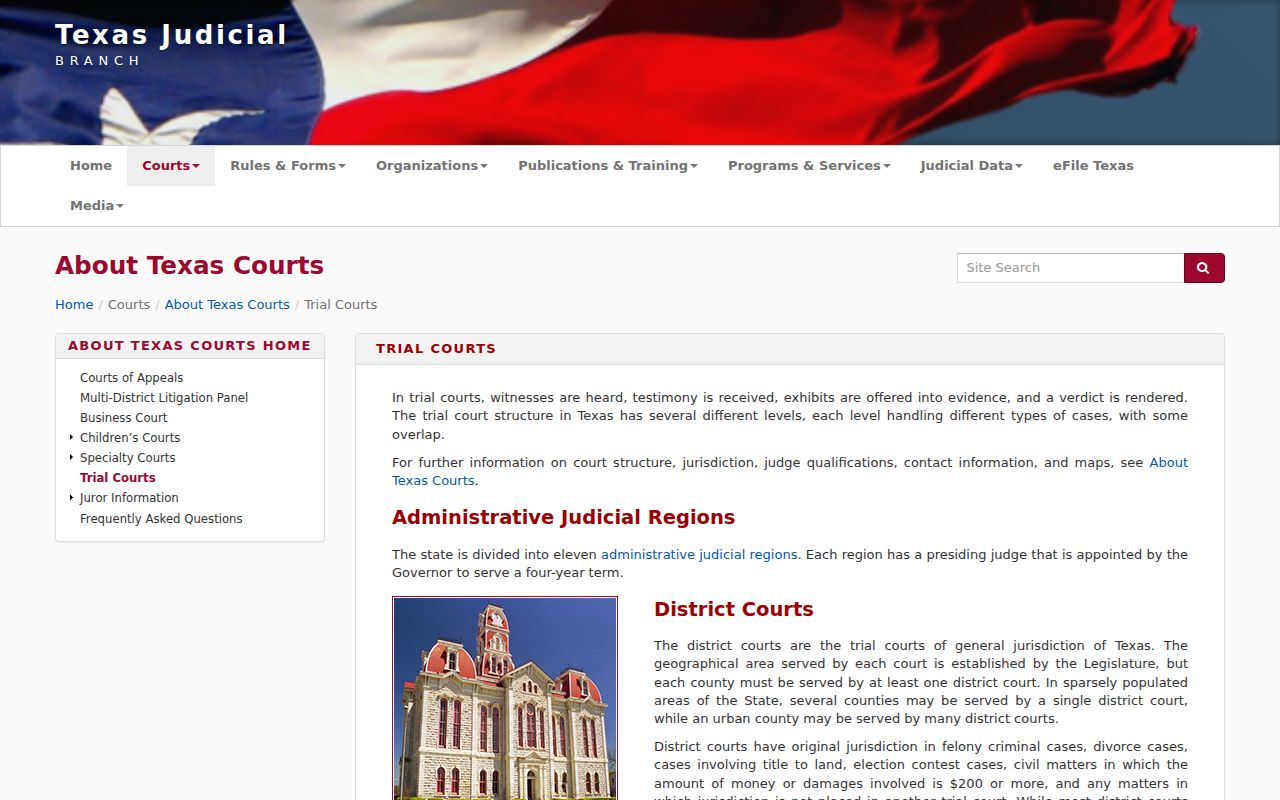
The court hierarchy in that source helps route a Schleicher County case to the proper local custodian.
Schleicher County Felony Court Bench
The 51st Judicial District serves Schleicher, Coke, Irion, Sterling, and Tom Green counties. Judge Carmen Symes Dusek is the current district judge, yet Schleicher County keeps its local felony file through the combined clerk in Eldorado. A regional coordinator does not move custody of the record to San Angelo or another county.
Criminal case coordinator Nydia Garcia handles court coordination by email. The court instructs messages to copy opposing counsel or self-represented parties. That address serves scheduling, not record production. For a docket sheet or certified judgment, call the Schleicher County clerk instead. This line between coordination and custody prevents a common delay.
How to Search Case Records
Schleicher County does not publish an Odyssey or Tyler criminal index. The sure route begins with the court level and clerk. Use a cause number when possible. If none is known, give the full name and an approximate filing year, then describe each paper needed.
- Decide whether the charge belongs in District, County, Justice, or Municipal Court.
- Call the correct clerk and provide the cause number, or a name plus the likely year.
- Ask for the docket sheet, charging instrument, orders, judgment, sentence, bond entries, and balance as needed.
- Ask whether inspection is available and whether responsive pages can be sent by email or mail.
- Confirm search, copy, and certification costs before ordering a certified disposition.
The official County Clerk page gives the local contact route and posted record links.
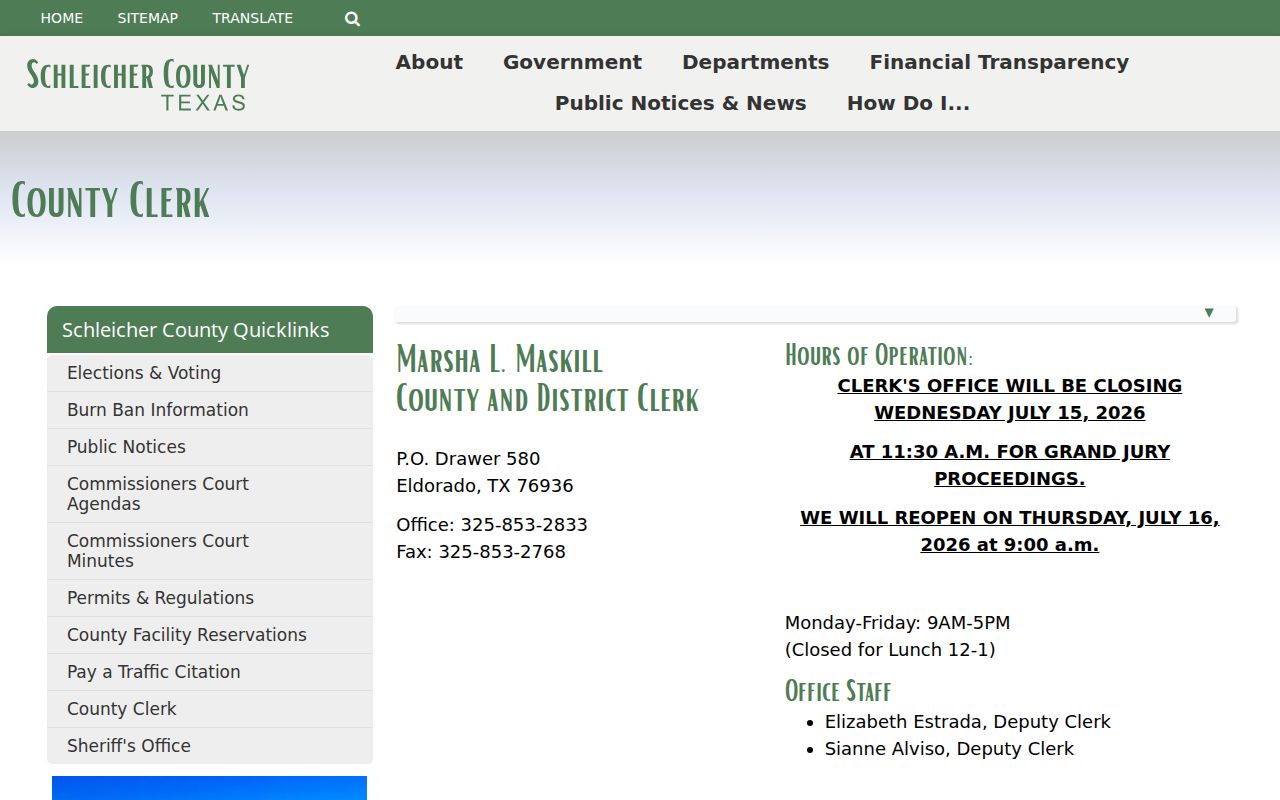
That page is an office gateway, not an instant criminal case database.
re:SearchTX for Schleicher County Cases
re:SearchTX is Texas's statewide e-filing document-access platform. It can supplement a Schleicher County criminal case search, but registration, court coverage, document access, and fees vary. Registered-user documents are currently ten cents per page, with a one-dollar minimum per document, and purchased documents remain available for 30 days. A blank result is not proof that no local case exists.
Because no complete Schleicher sample case was verified there, the safe search-field model is limited. The platform may support party or cause-number discovery, while the county's inquiry form only accepts general contact fields. The clerk remains the authoritative source.
| Route or Field | Input | Use | Limit |
|---|---|---|---|
| re:SearchTX | Party or case details | Find participating e-file records | Coverage and access vary |
| Cause number | Exact court identifier | Best clerk match | Must use the right court |
| Name and year | Full name, likely filing year | Fallback clerk search | Similar names need care |
| Clerk inquiry form | Name, contact details, reason | Start a general inquiry | No live case results |
The platform's official landing page shows the e-file access layer described above.
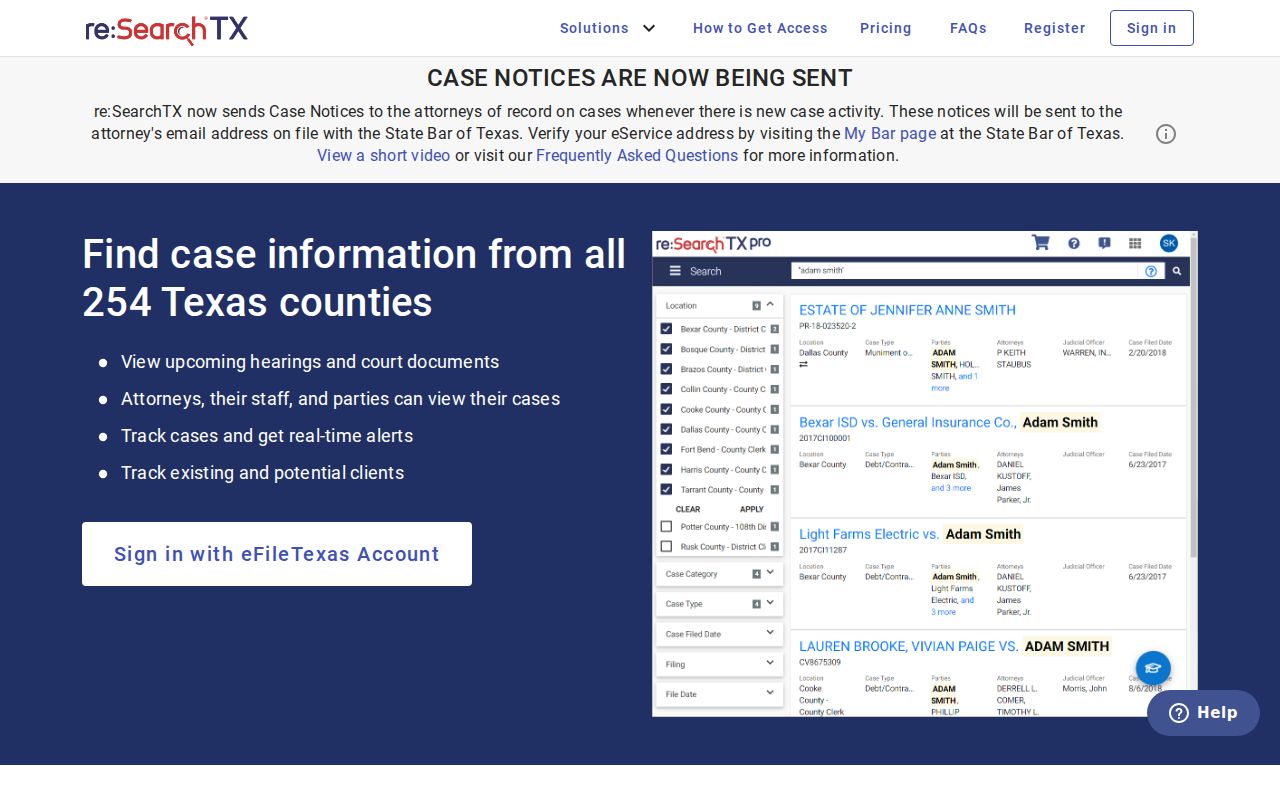
Use that layer as a lead, then verify the Schleicher County docket with its clerk.
Note: A missing online result does not rule out a paper, older, restricted, or not-yet-indexed Schleicher County case.
What the Case File Shows
A criminal case file records the prosecution after filing. Its parts answer different questions. The charging instrument states what the prosecutor alleged. Docket entries show activity. Orders record court rulings. The judgment gives the disposition, while the sentence sets punishment and conditions. Asking for only a name search may not yield all of them.
| Case Number & Court | Identifies the cause and the court with custody. |
|---|---|
| Charging Document | Complaint, information, or indictment stating filed allegations. |
| Docket Entries | Chronological filings, settings, motions, orders, and activity. |
| Hearing Dates | Scheduled or completed court events, not final outcomes by themselves. |
| Disposition & Judgment | The charge outcome and formal adjudication. |
| Sentence & Conditions | Custody, fine, community supervision, and other ordered terms. |
For a broader record trail, compare the file with the linked Schleicher County arrest history channels. The arrest entry and filed charge may differ.
Schleicher County Criminal Calendar Fields
An older official felony docket reveals how a Schleicher County calendar is arranged without serving as a current person search. It can list the court, judge, clerk, district attorney, courtroom, date, setting type, docket-mail date, numbered item, cause number, case style, filing date, case age, offense description, counsel, bondsman, and bond amount.
Those fields describe a calendar. A setting marked filed or reactivated does not establish a conviction, dismissal, or sentence. Request the judgment when the outcome matters. In plain terms, a cause number is the court's file identifier; a setting is a scheduled event; a disposition is the result of a charge; and a judgment is the formal court record of that result.
Stages of a Criminal Case
After an arrest or citation, the prosecutor decides which charge to file. A misdemeanor information commonly begins a county prosecution. A grand jury may return a true bill, meaning indictment, or a no-bill, meaning it declined indictment. Arraignment addresses the charge and plea. Pretrial work can include motions, discovery, and negotiations before a plea or trial resolves the case.
Case flow: Charges Filed › Arraignment › Pretrial › Plea or Trial › Disposition › Sentencing
The sequence can branch or stop. A charge may be rejected, dismissed, amended, or resolved through deferred adjudication. Deferred adjudication is community supervision without an adjudication of guilt, though DPS may still disclose it unless an order of nondisclosure applies.
Schleicher County Charges and Court Levels
Texas Penal Code Chapter 12 connects offense class with possible punishment and, in Schleicher County, with the likely trial court. Capital through state-jail felonies belong in the 51st District Court. Class A and B misdemeanors go to County Court. Fine-only Class C matters may proceed in Justice Court or Eldorado Municipal Court based on jurisdiction.
The official Texas penalty ranges provide the source rules for those classes.
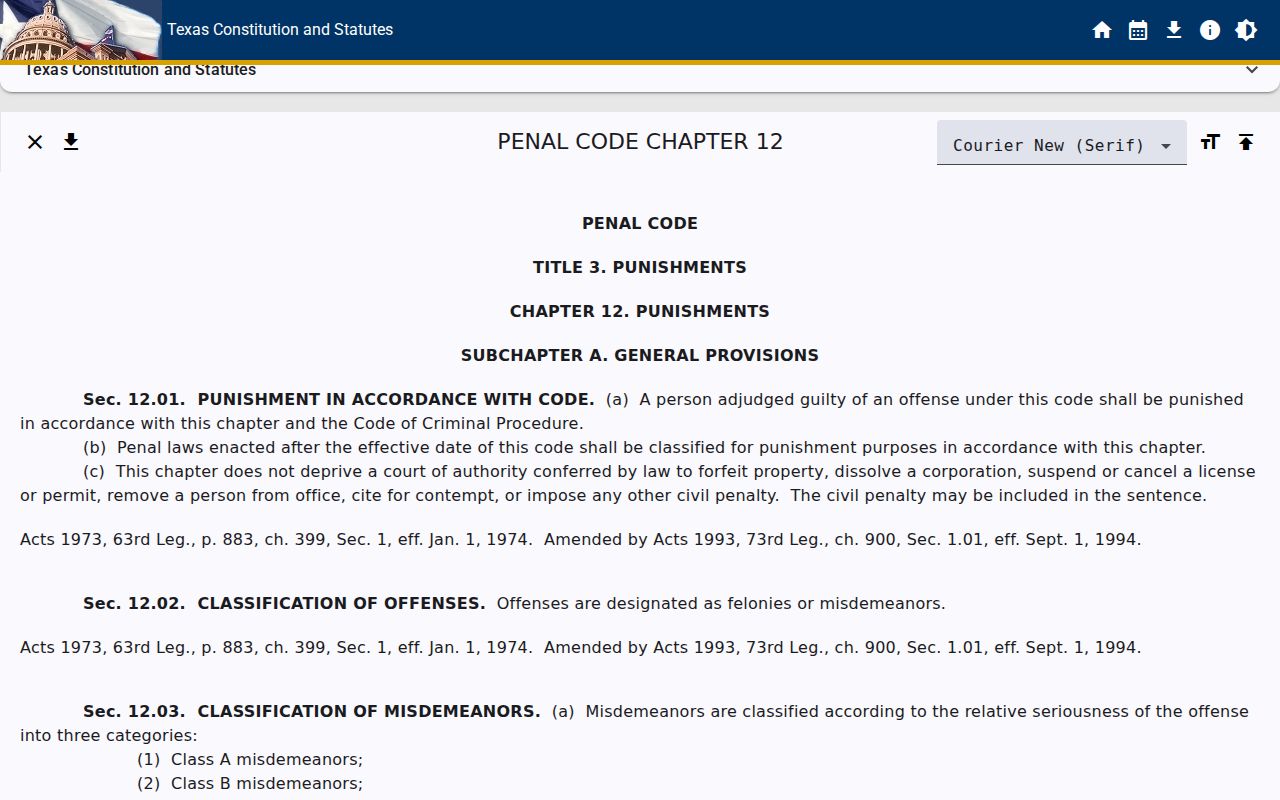
The filed classification is not always the final sentence because enhancements, amended charges, and case outcomes can change the result.
Correcting Schleicher County Court Dispositions
When a DPS record lacks the final result or reports it incorrectly, begin with the Schleicher County clerk. Ask for a certified disposition or judgment bearing the clerk's seal. The county posts one dollar per page for general copies and five dollars plus one dollar per page for certification in clerk materials, but the office must confirm whether those amounts apply to the requested criminal file.
The Schleicher County Attorney page identifies the local prosecutor's office, which creates or handles some charging material.
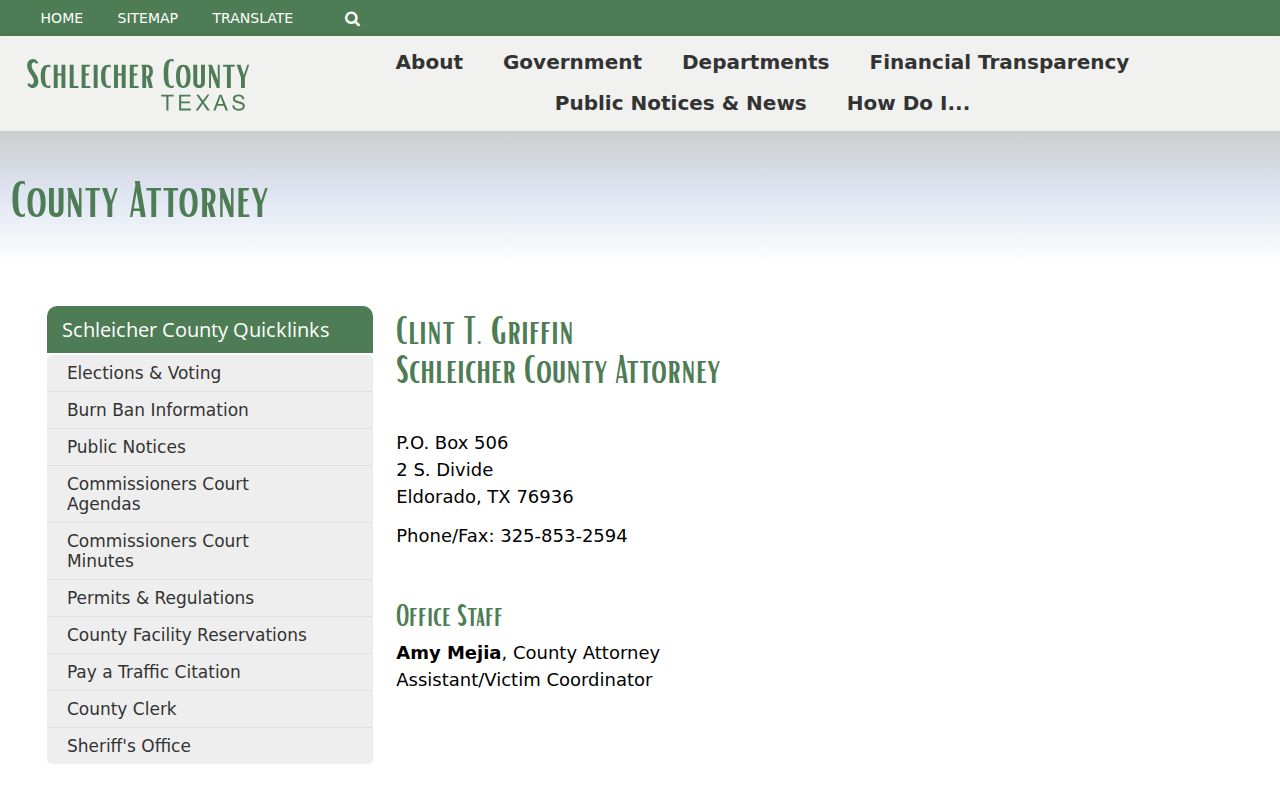
The prosecutor is not the custodian of the clerk's certified judgment, so direct the copy request to the combined clerk.
Access & Restrictions
Texas court case files do not follow the Texas Public Information Act in the same way as sheriff reports. Courts are not governmental bodies under that act. Adjudicative case access instead rests on common law, statutes, court rules, and the clerk's custodial duties. The Texas Public Information Act remains the right channel for an arresting-agency report.
Some information may still be sealed, expunged, restricted by an order of nondisclosure, protected as juvenile material, or redacted to shield victims, children, medical facts, and identifiers. Government Code Chapter 411 also limits criminal-history dissemination. Ask the clerk why a file is unavailable and whether a public docket, redacted copy, or in-person inspection can be provided.
A restricted result can have several causes. The record may be sealed, the requested detail may need redaction, the name may have changed, or the search may be aimed at the wrong court. Give the clerk a cause number when known and ask whether a public docket or redacted copy exists. If no cause number is available, a full name and approximate year can help staff distinguish similar files. Confirm access, delivery, and certification terms before relying on any copy.